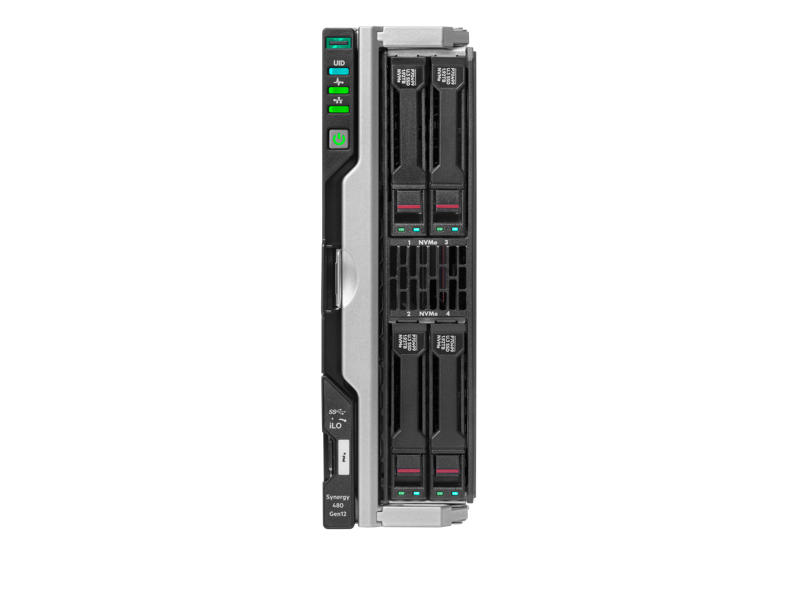
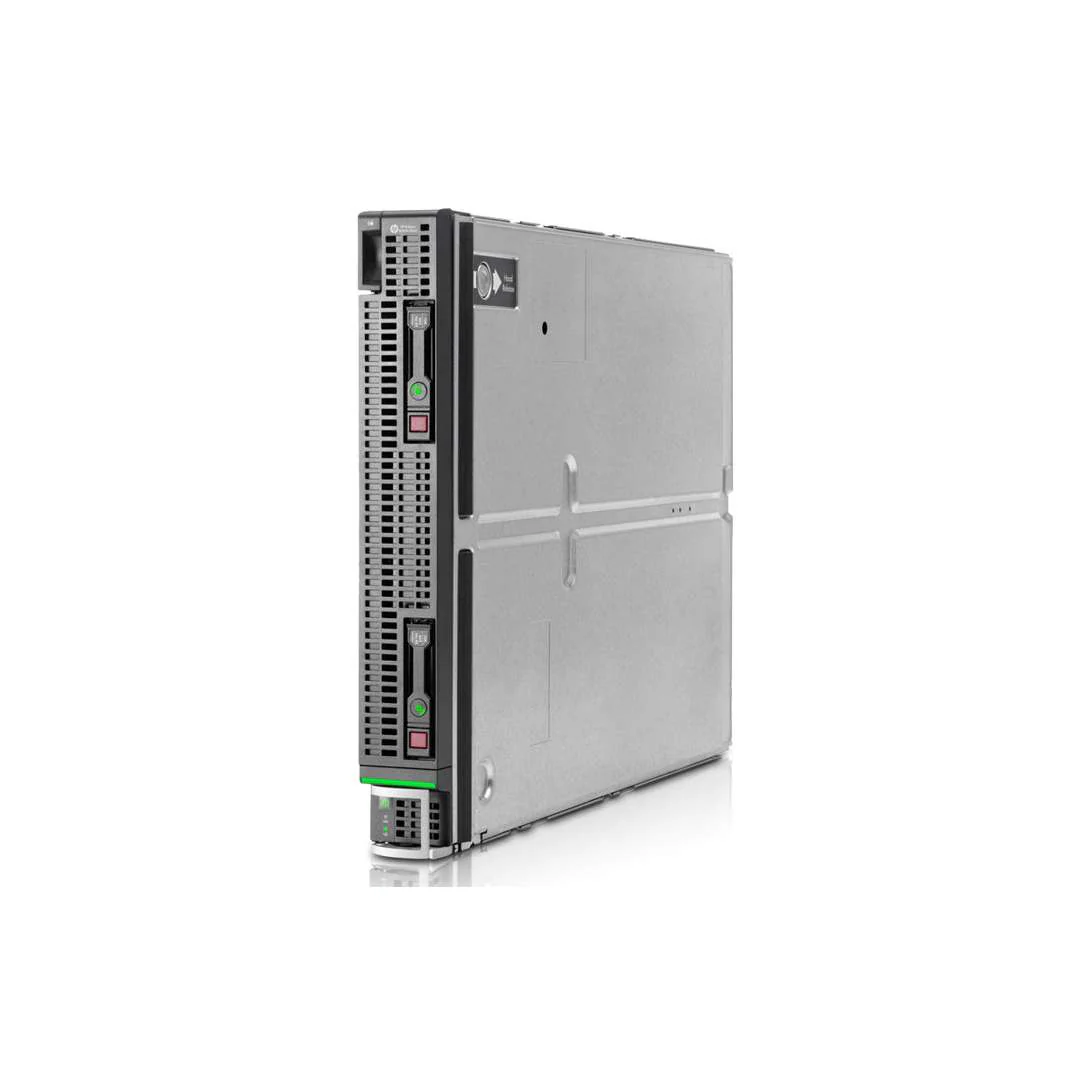
HPE Synergy 480 Gen11
Overview
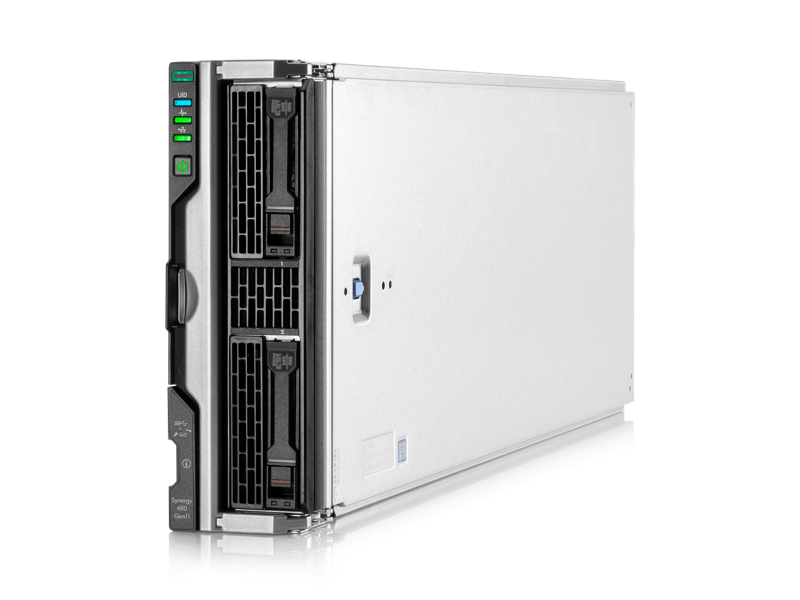
The HPE Synergy 480 Gen11 Compute Module is a next-generation, high-density dual-socket composable blade designed exclusively for the HPE Synergy 12000 Frame, representing a significant generational leap in compute density, memory bandwidth, and I/O throughput over its predecessor. Powered by 4th Gen Intel Xeon Scalable processors (Sapphire Rapids), the module supports up to two processors with up to 60 cores each, delivering unprecedented multi-threaded compute capacity for the most demanding enterprise virtualization, AI inferencing, and real-time analytics workloads. The platform integrates natively with HPE OneView 8.x and HPE Synergy Composer 2.0, enabling fully automated infrastructure-as-code provisioning, firmware lifecycle management, and composable resource orchestration through Redfish-compliant RESTful APIs. As the flagship compute module in the HPE Synergy Gen11 portfolio, the Synergy 480 Gen11 is built to support hybrid cloud strategies, delivering consistent infrastructure automation across on-premises deployments and HPE GreenLake cloud services.
Performance
The HPE Synergy 480 Gen11 supports up to two 4th Gen Intel Xeon Scalable processors (Sapphire Rapids) with up to 60 cores and 120 threads per socket, delivering a maximum of 120 cores and 240 threads per compute module for exceptional parallel workload throughput. Each processor supports Intel Turbo Boost Max Technology 3.0, Intel Advanced Matrix Extensions (AMX) for AI and machine learning acceleration, and Intel Deep Learning Boost (VNNI) for INT8 and BF16 inference workloads without requiring discrete accelerators. The platform transitions to DDR5 memory at speeds up to 4800 MT/s across 32 DIMM slots, delivering up to 2x the memory bandwidth of DDR4-based predecessors, enabling SAP HANA, Oracle Exadata-equivalent, and in-memory analytics platforms to operate at significantly reduced query latencies. PCIe 5.0 support doubles the per-lane bandwidth over PCIe 3.0, enabling next-generation NVMe storage adapters and high-speed fabric interconnects to fully saturate available I/O throughput without bottlenecking on the system bus.
Architecture
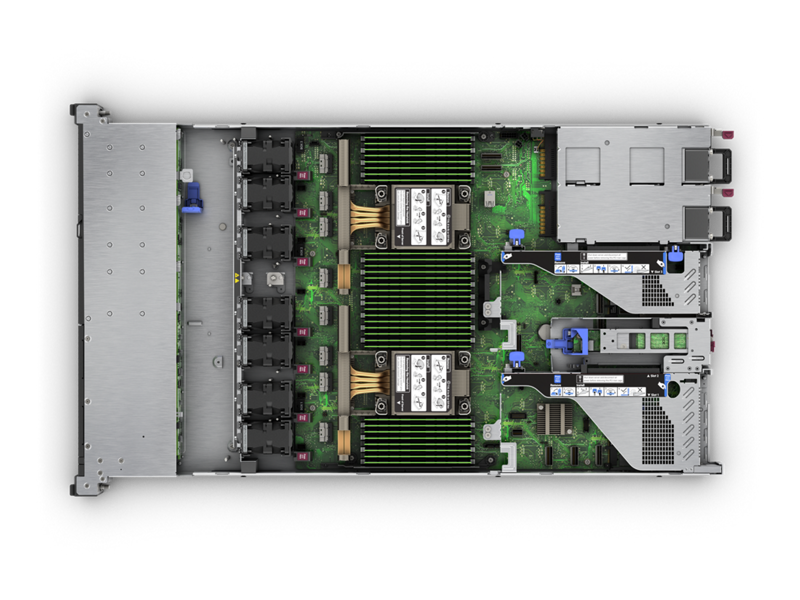
The HPE Synergy 480 Gen11 is built on the Intel Xeon Scalable Sapphire Rapids platform utilizing the Intel C741 chipset, with each processor supporting up to 80 PCIe 5.0 lanes for high-bandwidth, low-latency expansion across mezzanine and fabric interconnect slots. The module connects to the HPE Synergy 12000 Frame midplane via standardized bay connectors, providing shared power delivery, out-of-band management signaling, and high-speed fabric uplinks without any discrete internal cabling, maintaining the clean composable architecture inherited from the Gen10 platform. HPE iLO 6 (Integrated Lights-Out 6) is embedded directly on the system board as a dedicated management ASIC, providing enhanced security primitives, expanded telemetry collection, and broader Redfish schema coverage compared to iLO 5. The architecture supports HPE Synergy Image Streamer for stateless OS streaming to diskless compute nodes, and the updated mezzanine slot design accommodates next-generation HPE Virtual Connect SE 200Gb F32 Module interconnects for 200 GbE composable fabric connectivity.
Memory And Storage
The HPE Synergy 480 Gen11 provides 32 DIMM slots with support for DDR5 SmartMemory RDIMMs and LRDIMMs at speeds up to 4800 MT/s, achieving a maximum raw memory capacity of 8.0 TB per compute module using 256 GB LRDIMMs, more than doubling the addressable memory space of the Gen10 platform. DDR5 architecture introduces on-DIMM ECC with per-channel error correction, improving memory reliability at higher densities, while the eight-channel DDR5 memory subsystem per processor delivers aggregate memory bandwidth exceeding 300 GB/s per socket under full-channel population. Internal storage options include up to two M.2 NVMe Gen4 or SATA SSD slots for local OS boot media, with optional HPE NS204i-u NVMe Hot Plug Boot Device providing additional boot redundancy within the compute module bay footprint. HPE Smart Array Gen11 controllers available via mezzanine expansion provide RAID 0/1/5/6/10/50/60 with up to 8 GB FBWC (Flash-Backed Write Cache) and support for SAS 12G and NVMe-oF (NVMe over Fabrics) for disaggregated storage access across the Synergy composable fabric.
Networking
The HPE Synergy 480 Gen11 leverages dual mezzanine expansion slots to connect to HPE Synergy 12000 Frame fabric interconnects, supporting the new HPE Virtual Connect SE 200Gb F32 Module for Synergy, enabling up to 200 GbE per port for converged LAN, SAN, and NVMe-oF storage traffic over a single unified composable fabric. HPE Virtual Connect SE 200Gb technology delivers 2x the per-port bandwidth of the previous-generation 100Gb modules, supporting RDMA over Converged Ethernet (RoCE v2) for latency-sensitive distributed computing, AI training cluster interconnects, and high-performance storage access. SR-IOV support across all compatible mezzanine adapters enables direct PCIe 5.0 passthrough to virtual machines and containers, bypassing the hypervisor data path for network-intensive workloads requiring microsecond-level latency. HPE Synergy Composer 2.0 and HPE OneView 8.x manage all network fabric configurations, VLAN assignments, QoS policies, and uplink sets centrally, applying consistent network profiles across all compute modules within a logical enclosure without requiring per-node switch configuration.
Security Features
The HPE Synergy 480 Gen11 advances hardware security with HPE Silicon Root of Trust embedded in the iLO 6 ASIC, providing cryptographic firmware validation from the first instruction executed at power-on, ensuring that no tampered or unauthorized firmware component can initialize on the platform. HPE Secure Boot with UEFI 3.0 enforces signed bootloader and OS kernel verification, while the new HPE System Firmware Integrity Check performs automated hash-based validation of all firmware components against HPE-signed golden baselines during every boot cycle. Trusted Platform Module 2.0 (TPM 2.0) is available as a factory-integrated discrete chip, supporting hardware-rooted attestation, BitLocker full-disk encryption key sealing, vTPM provisioning for virtual machines, and integration with enterprise PKI and certificate lifecycle management platforms. The platform also introduces HPE Agentless Management Service 3.0 with enhanced security event telemetry streamed to HPE iLO 6, enabling SIEM integration via syslog and REST webhooks for real-time security incident detection and automated remediation workflows.
Management And Monitoring
The HPE Synergy 480 Gen11 is managed through HPE iLO 6, which introduces expanded Redfish 2.0 schema support, enhanced remote console capabilities including virtual keyboard-video-mouse (vKVM) at up to 1080p resolution, integrated REST-based scripting, and direct integration with HPE GreenLake Compute Ops Management for cloud-connected firmware lifecycle automation. HPE OneView 8.x provides a unified management plane for server profile templates, firmware baseline compliance reporting, hardware health dashboards, and automated remediation workflows, with native support for Ansible, Terraform, Puppet, and Chef infrastructure automation toolchains via published SDKs. HPE Synergy Composer 2.0 orchestrates all composable infrastructure operations within the Synergy 12000 Frame, managing logical enclosure creation, resource pool discovery, server profile assignments, and fabric interconnect configuration from a single management appliance embedded within the frame. HPE GreenLake Compute Ops Management extends management capabilities to a SaaS delivery model, enabling centralized firmware updates, compliance auditing, and health monitoring across geographically distributed Synergy deployments without requiring on-premises management infrastructure at each site.
Scalability
The HPE Synergy 12000 Frame accommodates up to 12 single-bay compute module positions, allowing a fully populated frame to house 12 HPE Synergy 480 Gen11 modules delivering up to 1,440 processor cores and 96 TB of DDR5 memory within a single 10U enclosure at maximum configuration. HPE Synergy Frame Link Modules interconnect multiple HPE Synergy 12000 Frames into a single logical enclosure managed by HPE OneView, enabling scale-out to thousands of compute nodes under unified policy-driven management without per-frame management appliance overhead. The composable fabric architecture scales network bandwidth independently of compute density, allowing administrators to upgrade fabric interconnect modules from 100 GbE to 200 GbE without replacing compute modules, protecting infrastructure investment as bandwidth requirements grow. HPE GreenLake consumption-based models allow organizations to right-size initial deployments and scale compute, memory, and fabric capacity on-demand with pay-per-use billing aligned to actual workload consumption, eliminating the capital expenditure risk of overprovisioning.
Use Cases
The HPE Synergy 480 Gen11 is purpose-optimized for enterprise virtualization platforms including VMware vSphere 8.0, Microsoft Hyper-V 2022, and Red Hat Virtualization 4.4, where its 120-core per-module compute density and 8.0 TB memory capacity enable extreme VM consolidation ratios and support for memory-intensive workloads that exceed the capacity of previous-generation blade platforms. AI inferencing and machine learning preprocessing workloads benefit from Intel AMX and VNNI instruction set acceleration built into the 4th Gen Xeon Scalable processors, enabling CPU-based inference at throughputs previously achievable only with discrete GPU accelerators for transformer-based and convolutional neural network models. SAP HANA, Oracle Database In-Memory, and Microsoft SQL Server 2022 deployments leverage the 8-channel DDR5 memory subsystem and NVMe-oF storage access to achieve sub-millisecond query response times for terabyte-scale in-memory datasets with full ACID transaction compliance. Cloud-native platform teams running Red Hat OpenShift 4.x, VMware Tanzu, or Canonical Charmed Kubernetes benefit from HPE Synergy Image Streamer stateless compute provisioning and HPE OneView Ansible collections for fully automated bare-metal node lifecycle management integrated into GitOps-driven CI/CD pipelines.