HPE Synergy 480 Gen10
Overview
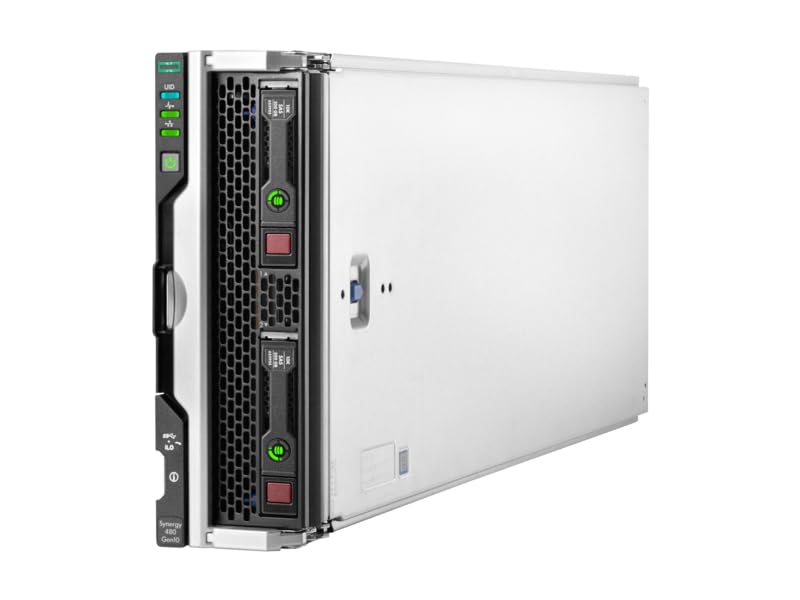
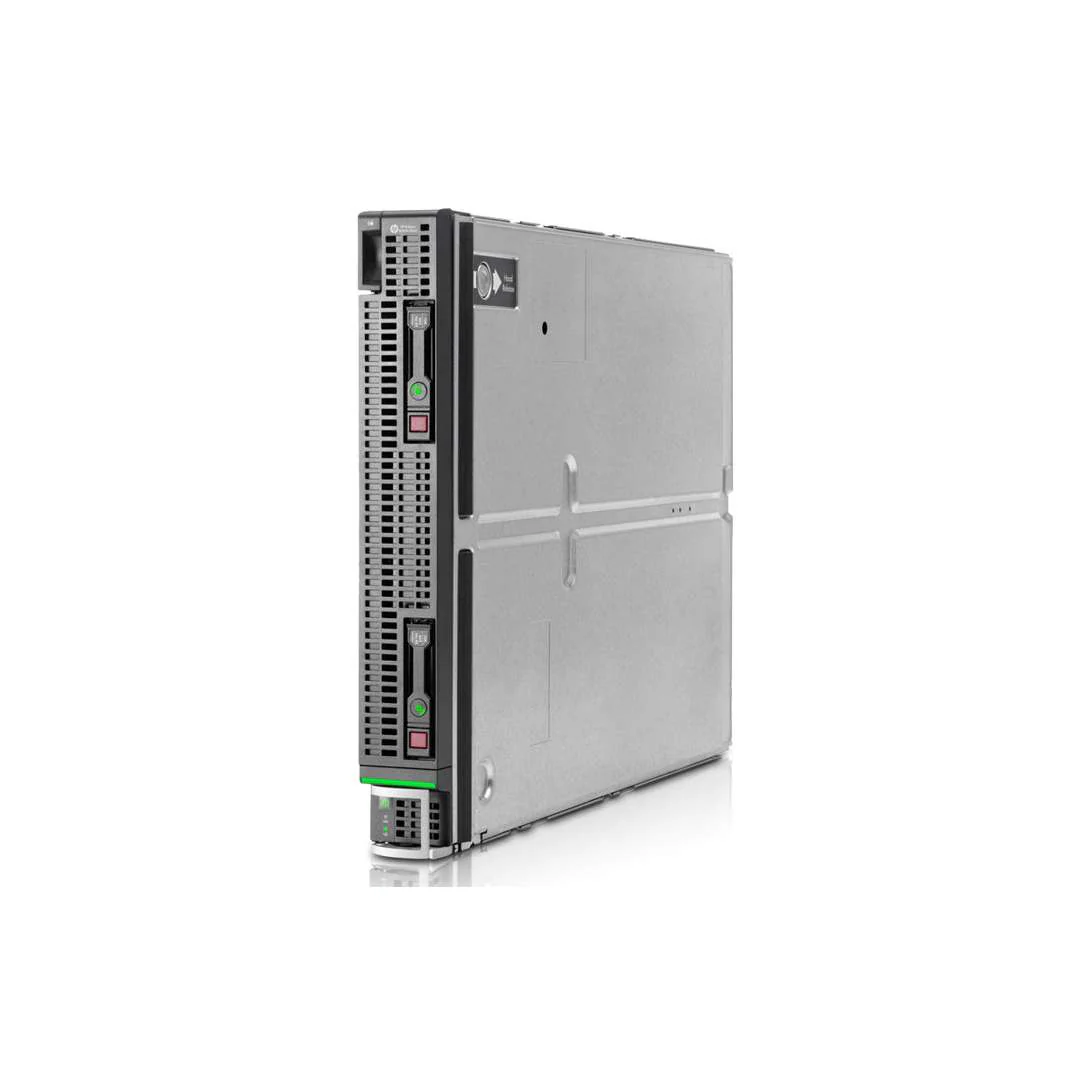
The HPE Synergy 480 Gen10 Compute Module is a purpose-built, high-density dual-socket compute node designed exclusively for the HPE Synergy 12000 Frame, delivering composable infrastructure capabilities that allow IT organizations to fluidly pool and repurpose compute, storage, and fabric resources on demand. Built on the Intel Xeon Scalable processor platform (Cascade Lake and Cooper Lake generations), it supports up to two second-generation Intel Xeon Scalable processors with up to 28 cores each, enabling exceptional parallel processing throughput for enterprise-class virtualization, database, and cloud-native application workloads. The module integrates natively with HPE OneView and HPE Synergy Composer, enabling infrastructure-as-code automation and template-driven server profile management across large-scale deployments. As a key building block of HPE Composable Infrastructure, the Synergy 480 Gen10 allows organizations to rapidly provision and reprovision resources without manual hardware reconfiguration, dramatically reducing time-to-service for new workloads.
Performance
The HPE Synergy 480 Gen10 supports up to two 2nd Gen Intel Xeon Scalable processors (Cascade Lake), each delivering up to 28 cores and 56 threads, with a maximum combined TDP of 205W per socket, providing exceptional multi-threaded compute density suited to intensive enterprise applications. The platform supports Intel Turbo Boost Technology 2.0 and Intel Hyper-Threading Technology, maximizing CPU utilization across virtualized and containerized workloads. Memory bandwidth reaches up to 2933 MT/s with DDR4 DIMMs across 24 DIMM slots, ensuring that memory-intensive applications such as SAP HANA, Oracle Database, and Microsoft SQL Server operate with minimal latency and high throughput. Support for Intel Optane DC Persistent Memory (PMem) modules in App Direct or Memory Mode further accelerates in-memory database and analytics workloads by providing byte-addressable storage-class memory directly on the memory bus.
Architecture
The HPE Synergy 480 Gen10 Compute Module is architected around a dual-socket Intel Xeon Scalable platform utilizing the Intel C621 chipset, with a PCIe 3.0 interconnect fabric supporting up to 48 PCIe 3.0 lanes per processor for low-latency expansion. The module occupies a single Synergy frame bay and connects to the HPE Synergy 12000 Frame midplane for power, management, and high-speed data fabric connectivity, enabling converged compute-and-fabric resource pooling without discrete cabling overhead. HPE Flexible Smart Array Controllers and Smart HBAs are supported via mezzanine expansion slots, allowing administrators to configure the compute node for direct-attached NVMe, SAS, or FC storage depending on workload requirements. The architecture also supports HPE Synergy Image Streamer, enabling stateless compute by streaming OS images to diskless nodes at boot time, significantly reducing local storage dependencies and simplifying lifecycle management across large compute fleets.
Memory And Storage
The HPE Synergy 480 Gen10 provides 24 DIMM slots supporting DDR4 SmartMemory and HPE Standard Memory at speeds up to 2933 MT/s, with a maximum memory capacity of 3.0 TB using 128 GB LRDIMMs, or up to 6.0 TB when Intel Optane DC Persistent Memory modules are utilized in conjunction with DDR4 DIMMs. Persistent Memory support enables Memory Mode for transparent DRAM expansion or App Direct Mode for persistent, low-latency storage directly accessible to applications without traversing the I/O subsystem. Internal storage is provided via up to two M.2 NVMe or SATA SSD slots for local OS boot, or alternatively the module can be configured as diskless using HPE Synergy Image Streamer for stateless workloads. HPE Smart Array controllers available as mezzanine cards provide RAID 0/1/5/6/10/50/60 support for direct-attached SAS/SATA drives, with optional 4 GB FBWC (Flash-Backed Write Cache) for write-intensive I/O acceleration.
Networking
The HPE Synergy 480 Gen10 connects to the HPE Synergy 12000 Frame fabric interconnects via dual high-speed mezzanine slots, supporting HPE Virtual Connect SE 100Gb F32 Module for Synergy or HPE Synergy 10Gb Interconnect Link Module, enabling FlexFabric connectivity of up to 100 Gbps per port for converged LAN, SAN, and management traffic over a single physical fabric. HPE Virtual Connect technology abstracts MAC addresses, WWNs, and server identities from the physical hardware, enabling workload mobility and simplified network management without reconfiguration of upstream switches. The module supports SR-IOV (Single Root I/O Virtualization) across supported NICs for direct PCIe passthrough to virtual machines, reducing hypervisor overhead on high-throughput network workloads. HPE Synergy Composer manages the network fabric in conjunction with HPE OneView, applying network profiles consistently across hundreds of compute modules through a single pane of glass.
Security Features
The HPE Synergy 480 Gen10 incorporates HPE Silicon Root of Trust technology, which cryptographically anchors firmware integrity to a physically immutable root embedded in the HPE iLO 5 ASIC, preventing unauthorized firmware from executing even if UEFI BIOS or iLO firmware is compromised. HPE Secure Boot with UEFI 2.5 ensures that only signed boot loaders and OS images are permitted to execute during system initialization, providing defense-in-depth against boot-level malware and unauthorized OS loading. Runtime Firmware Validation continuously monitors critical firmware components during operation and triggers alerts or recovery actions if tampering or corruption is detected post-boot. Trusted Platform Module (TPM) 2.0 is supported as a factory-integrated option, providing hardware-rooted key storage for BitLocker, vTPM, and enterprise certificate management workflows, and the system supports AES-256 encryption for data-at-rest when used in conjunction with HPE Smart Array controllers with drive encryption capabilities.
Management And Monitoring
The HPE Synergy 480 Gen10 is managed through HPE iLO 5 (Integrated Lights-Out 5), which provides out-of-band management, remote console access, virtual media, power capping, thermal monitoring, and RESTful API (Redfish-compliant) programmatic control independent of the host OS state. HPE OneView integration enables template-driven server profile management, automated firmware baseline compliance, and lifecycle event tracking across entire Synergy frame deployments from a centralized management console. HPE Synergy Composer orchestrates composable infrastructure operations including resource discovery, logical enclosure management, and server profile assignment, supporting both GUI-driven and API-driven workflows for DevOps and infrastructure automation pipelines. HPE InfoSight Predictive Analytics (now part of HPE GreenLake) ingests telemetry from iLO 5 to provide predictive health monitoring, cross-stack performance correlation, and proactive hardware failure alerting, reducing unplanned downtime across the fleet.
Scalability
The HPE Synergy 12000 Frame supports up to 12 compute module bays, allowing organizations to deploy up to 12 HPE Synergy 480 Gen10 Compute Modules within a single 10U frame, achieving extreme compute density of up to 336 processor cores per frame at maximum CPU configuration. Multiple HPE Synergy 12000 Frames can be linked together using HPE Synergy Frame Link Modules and managed as a single logical enclosure under HPE OneView, enabling seamless scale-out to hundreds of compute nodes across a unified composable domain. Fabric scalability is handled through HPE Virtual Connect, which supports VLAN tagging, QoS policies, and network segmentation across all compute modules without requiring upstream network reconfiguration as new nodes are added. HPE Synergy composable infrastructure scales compute, storage, and fabric resources independently, allowing organizations to grow each tier at its own pace without overprovisioning adjacent resources, aligning infrastructure investment directly with workload growth trajectories.
Use Cases
The HPE Synergy 480 Gen10 is ideally suited for large-scale VMware vSphere and Microsoft Hyper-V virtualization environments where high VM density, rapid VM provisioning, and live workload mobility are critical operational requirements, with its composable fabric enabling seamless vMotion and live storage migration. Enterprise database deployments including Oracle RAC, Microsoft SQL Server Always On Availability Groups, and SAP HANA scale-up instances benefit directly from the platform's 3.0 TB DDR4 memory capacity and Intel Optane PMem support for in-memory acceleration. Cloud-native workloads running on Red Hat OpenShift, VMware Tanzu, or Kubernetes-as-a-Service platforms leverage the stateless compute capability provided by HPE Synergy Image Streamer and the rapid resource recomposition enabled by HPE OneView server profiles. DevOps and CI/CD pipeline infrastructure teams benefit from the RESTful Redfish/iLO 5 API surface and HPE OneView automation capabilities, enabling fully programmatic bare-metal provisioning and deprovisioning integrated with Ansible, Terraform, and HPE OneView SDKs.