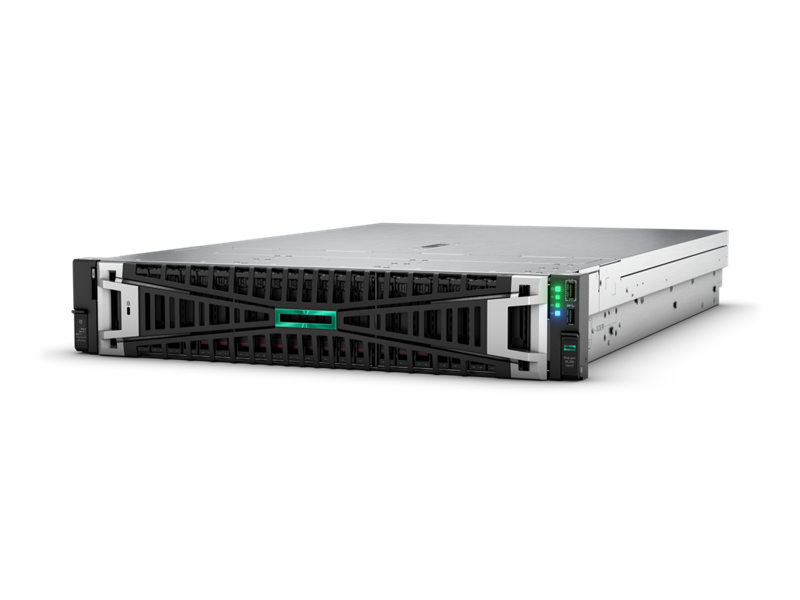
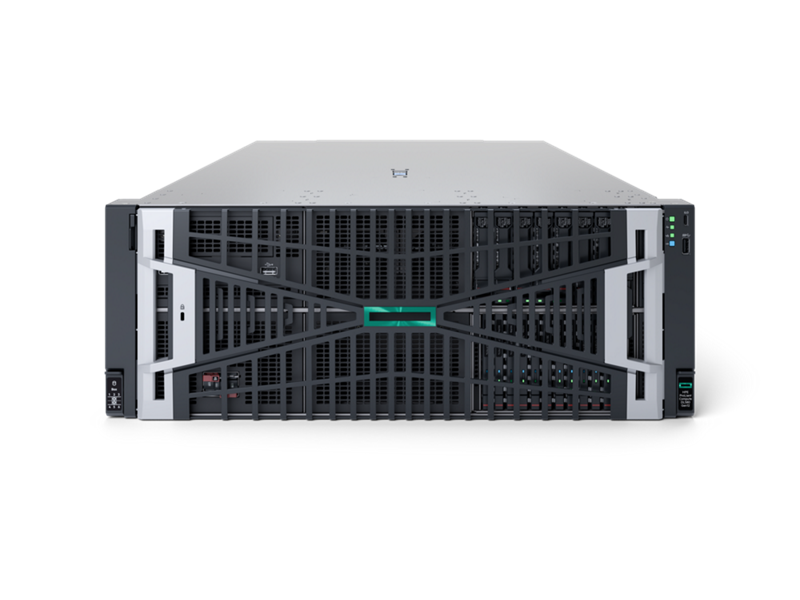
HPE SimpliVity 380 Gen10
Overview
The HPE SimpliVity 380 Gen10 is an enterprise-grade hci platform engineered to deliver exceptional compute performance, operational flexibility, and infrastructure resilience for demanding enterprise workloads. The platform is designed with a comprehensive set of hardware and software capabilities that address the full spectrum of modern enterprise IT requirements, from high-density virtualization and cloud-native application hosting to mission-critical database and business intelligence workloads. With deep integration into modern management and automation frameworks, the HPE SimpliVity 380 Gen10 enables IT organizations to accelerate service delivery while reducing operational complexity across their infrastructure estate.
Compute Resources
The HPE SimpliVity 380 Gen10 delivers outstanding compute performance through its support for industry-leading Intel Xeon Scalable processors, providing the processing density and per-core throughput required for the most demanding enterprise workloads including large-scale virtualization, real-time analytics, and high-frequency transactional processing. The platform's memory subsystem utilizes high-bandwidth DDR5 memory, ensuring that memory-intensive applications such as SAP HANA, Oracle Database In-Memory, and Microsoft SQL Server achieve optimal throughput with minimal latency penalties across full memory channel populations. Advanced processor technologies including hardware-level accelerators for cryptographic processing, data compression, and AI inferencing offload workloads from general-purpose compute cores, maximizing effective application throughput per watt of power consumed. The platform sustains peak performance under continuous enterprise workloads through optimized thermal design, intelligent power management, and dynamic performance scaling that maintains consistent CPU frequencies across sustained high-utilization periods.
Storage Architecture
The HPE SimpliVity 380 Gen10 is built on a highly optimized system architecture centered on the enterprise-grade chipset, providing a robust and scalable foundation for enterprise-grade compute, I/O, and fabric operations across diverse workload profiles. The platform's I/O subsystem leverages PCIe 5.0 interconnect technology, delivering the lane bandwidth and latency characteristics required for next-generation NVMe storage adapters, high-speed network interface cards, and hardware accelerator cards to operate simultaneously at full line-rate throughput. The system board design incorporates multiple redundancy mechanisms including redundant power pathways, memory error correction and fault isolation, and hot-swap component support across critical subsystems to maintain continuous availability during component maintenance or failure events. The overall architecture is validated for operation in enterprise data center environments under ASHRAE thermal classifications, supporting high-density rack configurations without requiring specialized cooling infrastructure.
Networking And Fabric
The HPE SimpliVity 380 Gen10 delivers comprehensive network connectivity through multi-speed Ethernet connectivity, supporting converged LAN, SAN, and management traffic across a unified high-speed fabric for reduced cabling complexity and simplified network operations in high-density rack deployments. The platform supports Software-Defined Networking integration through SR-IOV-capable network adapters, enabling direct PCIe passthrough to virtual machines and containers at bare-metal network performance levels without hypervisor data path overhead for latency-sensitive workloads. Network redundancy is achieved through NIC teaming, LACP-based link aggregation, and active-passive failover configurations supported natively by the embedded network management stack, ensuring continuous network availability during link or adapter failure events. OCP 3.0 mezzanine support allows administrators to select from a broad ecosystem of certified 10/25/100GbE adapters from multiple vendors to match specific bandwidth, protocol, and fabric requirements without occupying primary PCIe expansion slots.
Data Protection
The HPE SimpliVity 380 Gen10 incorporates enterprise-grade data protection capabilities that meet the operational and technical requirements of production enterprise environments. These platform capabilities reflect HPE's engineering investment in delivering production-validated enterprise infrastructure that reduces operational risk and accelerates time-to-value for new workload deployments across diverse IT environments.
Management Platform
The HPE SimpliVity 380 Gen10 is managed through comprehensive out-of-band management, providing full lifecycle control from initial hardware discovery and OS deployment through firmware updates, performance monitoring, and eventual decommissioning via a comprehensive RESTful Redfish-compliant API surface that integrates natively with enterprise infrastructure automation frameworks. Out-of-band management capabilities remain fully operational independent of host OS and application state, enabling administrators to perform remote power operations, virtual console access, virtual media mounting, and firmware configuration on unresponsive or offline systems without requiring physical data center access. Integration with leading infrastructure-as-code platforms including Ansible, Terraform, Puppet, and Chef through published provider modules and collections enables fully programmatic bare-metal server lifecycle management integrated into GitOps-driven CI/CD pipelines for DevOps and platform engineering teams. Predictive health analytics ingest continuous telemetry streams from embedded management controllers to identify hardware degradation trends and component failure precursors days in advance, enabling proactive maintenance scheduling that prevents unplanned production downtime.
Performance Profile
The HPE SimpliVity 380 Gen10 delivers outstanding compute performance through its support for industry-leading Intel Xeon Scalable processors, providing the processing density and per-core throughput required for the most demanding enterprise workloads including large-scale virtualization, real-time analytics, and high-frequency transactional processing. The platform's memory subsystem utilizes high-bandwidth DDR5 memory, ensuring that memory-intensive applications such as SAP HANA, Oracle Database In-Memory, and Microsoft SQL Server achieve optimal throughput with minimal latency penalties across full memory channel populations. Advanced processor technologies including hardware-level accelerators for cryptographic processing, data compression, and AI inferencing offload workloads from general-purpose compute cores, maximizing effective application throughput per watt of power consumed. The platform sustains peak performance under continuous enterprise workloads through optimized thermal design, intelligent power management, and dynamic performance scaling that maintains consistent CPU frequencies across sustained high-utilization periods.
Scalability
The HPE SimpliVity 380 Gen10 supports flexible scaling of compute, memory, storage, and network resources to accommodate growing workload demands without requiring platform replacement or significant infrastructure redesign across the majority of capacity growth scenarios encountered in enterprise environments. Horizontal scale-out is enabled through integration with cluster management frameworks, hypervisor live migration capabilities, and container orchestration platforms that distribute workloads across multiple server nodes as demand increases beyond single-node capacity thresholds. Vertical scaling within a single platform is supported through processor socket expansion, memory capacity growth to the maximum supported ceiling, and storage drive bay population increases using the full range of supported SAS, SATA, and NVMe drive options at any point during the operational lifecycle of the platform. The platform's standard rack form factor and industry-standard management interfaces ensure compatibility with existing enterprise data center power, cooling, and management infrastructure, protecting the operational investment in existing data center facilities as new server capacity is added.
Use Cases
The HPE SimpliVity 380 Gen10 is optimally suited for enterprise virtualization platforms including VMware vSphere, Microsoft Hyper-V, and Red Hat OpenShift Virtualization, where its compute density and large memory capacity enable high VM consolidation ratios and support for memory-overcommitted workload profiles at production scale. Mission-critical database deployments including Oracle Database 23c, Microsoft SQL Server 2022, SAP HANA scale-up, and PostgreSQL benefit from the platform's high-bandwidth memory subsystem and NVMe storage performance to achieve sub-millisecond query latencies on terabyte-scale production datasets with full ACID transaction compliance under peak load. Cloud-native workloads running on Kubernetes distributions including Red Hat OpenShift 4.x, Rancher Kubernetes Engine 2, and VMware Tanzu Kubernetes Grid leverage the platform's RESTful management API and automation framework integrations for fully programmatic node lifecycle management within GitOps-driven infrastructure pipelines. High-performance computing, AI inferencing preprocessing, financial risk modeling, and real-time stream analytics workloads benefit from the platform's high core count, expanded memory bandwidth, and hardware accelerator support to deliver the throughput and latency characteristics required for time-sensitive computational workflows.